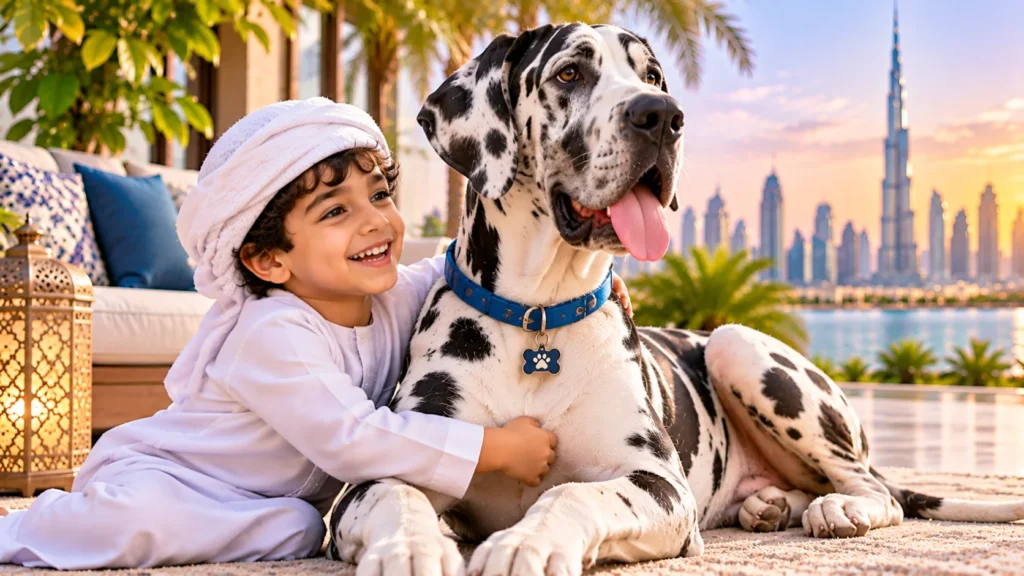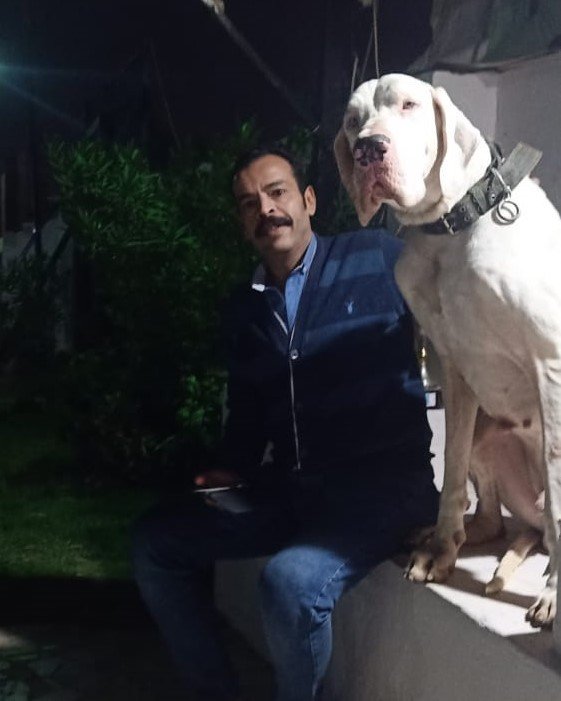

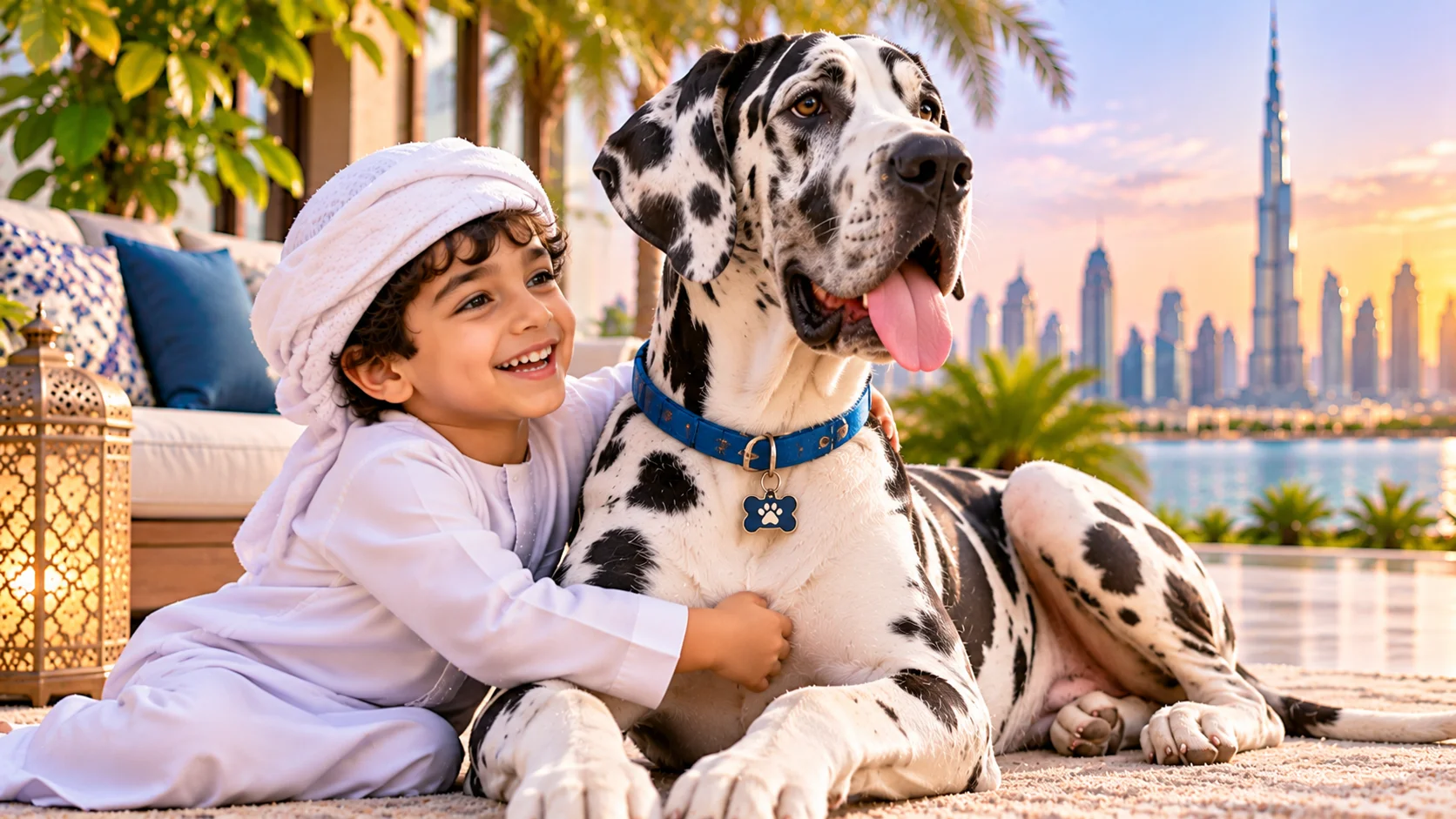

The Great Dane size is one of the first things people notice about this impressive dog breed. Great Danes are among the tallest domestic dogs in the world, with long legs, a deep chest, and a strong body that can reach a remarkable height. But their size isn’t just about looks. It affects their daily exercise, food portions, living space, health needs, and care costs.
If you are thinking about getting a Great Dane into your home in the UAE, understanding its expected height and weight will help you decide whether this giant breed matches your lifestyle.
An adult Great Dane can stand around 28 to 34 inches (71 to 86 cm) at the shoulder, depending on sex and individual development. Males are generally taller and heavier than females. Their growth also happens quickly during puppyhood, which means a small-looking puppy can become a very large dog within its first year. Knowing what to expect at each stage makes it easier to prepare your home, choose suitable food, and support healthy development.
Understanding the Average Great Dane Size
A Great Dane is a giant dog breed known for its tall, athletic build. Although its body is large, a healthy Great Dane should not look excessively heavy or bulky. The breed has a deep chest, a long neck, strong legs, and a body that is usually longer than its height at the shoulder.
Average Great Dane Size and Weight
The average adult measurements are:
| Measurement | Male Great Dane | Female Great Dane |
|---|---|---|
| Height at the shoulder | 30–34 inches (76–86 cm) | 28–32 inches (71–81 cm) |
| Typical weight | 140–175 lb (64–79 kg) | 110–140 lb (50–64 kg) |
| General build | Larger and heavier | Usually lighter and slightly smaller |
These figures are general ranges, not strict limits for every dog. Some healthy Great Danes may fall outside them because of genetics, body condition, and breeding lines.
How Is Great Dane Height Measured?
One important point is that height is measured at the shoulder, not at the top of the head. When a Great Dane raises its head, it can appear much taller than its official shoulder measurement. This is why comparing photographs can be misleading.
Why Is the Great Dane Size So Impressive?
The breed’s height comes from its long legs and overall body structure. Its chest is deep, and its frame is designed to support a large body while allowing it to move with a smooth, powerful stride.
Despite its size, the Great Dane is not meant to be slow or clumsy. A healthy adult should move comfortably, with balanced steps and good coordination.
Excessive body weight can place unnecessary pressure on its joints, so a larger number on the scale does not automatically mean a healthier dog.
Male vs. Female Great Dane Size
Male and female Great Danes share the same general appearance, but there are noticeable differences in their average measurements.
| Characteristic | Male Great Dane | Female Great Dane |
|---|---|---|
| Average height | 30–34 inches | 28–32 inches |
| Average weight | 140–175 pounds | 110–140 pounds |
| General build | Usually taller, broader, and heavier | Usually lighter with a slightly smaller frame |
Males are usually taller, have a broader head, and carry more body weight. Females tend to have a slightly lighter frame.
These differences are useful when estimating adult size, but they should not be the only factor when choosing a puppy. Two puppies of the same sex can grow at different rates. Their parents’ size, genetics, nutrition, and overall health all influence their final measurements.
Which Has a Larger Great Dane Size, Male or Female?
Male Great Danes are generally larger than females. However, an individual female may be taller or heavier than a particular male, especially when they come from different bloodlines.
If adult size is important to you, ask the breeder for the height and weight of both parents. This gives you a more useful indication than relying on the puppy’s current weight alone.
Great Dane Size by Age: Puppy Growth Stages
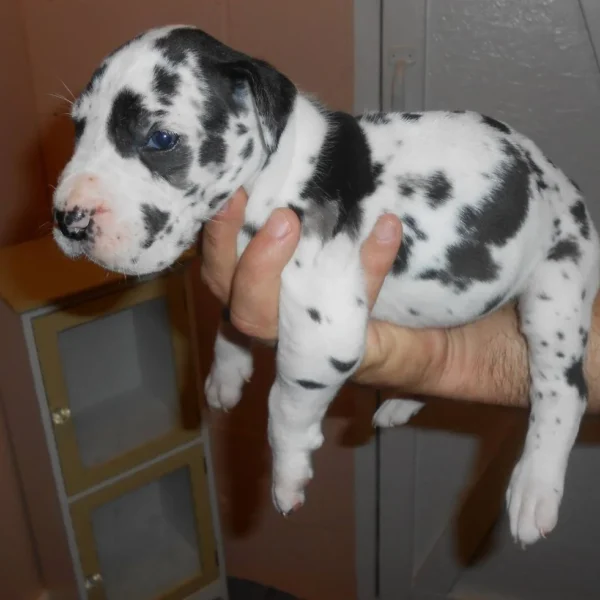
Great Danes grow quickly, especially during their first year. Their development is not simply a steady increase in height and weight. Different parts of the body mature at different speeds, and their bones and joints need time to develop.
The following table provides a general growth guide. Individual puppies may grow faster or slower, so use these figures as estimates rather than fixed targets.
Great Dane Puppy Growth Chart by Age
| Age | Approximate Male Weight | Approximate Female Weight |
|---|---|---|
| 2 months | 18–30 lb (8–14 kg) | 15–25 lb (7–11 kg) |
| 3 months | 30–45 lb (14–20 kg) | 25–40 lb (11–18 kg) |
| 4 months | 45–60 lb (20–27 kg) | 40–55 lb (18–25 kg) |
| 6 months | 70–100 lb (32–45 kg) | 60–85 lb (27–39 kg) |
| 9 months | 100–130 lb (45–59 kg) | 85–110 lb (39–50 kg) |
| 12 months | 115–150 lb (52–68 kg) | 95–125 lb (43–57 kg) |
| 18 months | 130–170 lb (59–77 kg) | 105–135 lb (48–61 kg) |
| 24 months | 140–175 lb (64–79 kg) | 110–140 lb (50–64 kg) |
The table shows why planning for a Great Dane puppy requires more preparation than planning for a small breed. Within a few months, the puppy may become too large to carry comfortably.
Its bed, crate, feeding equipment, and walking equipment will also need to be suitable for a growing giant-breed dog.
Great Dane Size at 2 to 4 Months
During the first four months, a Great Dane puppy develops rapidly. Its legs become longer, its body gains weight, and its coordination improves.
At this age, puppies need several short periods of activity rather than long, exhausting walks.
Puppies should also begin learning basic household rules, including:
- Not jumping on people.
- Walking calmly on a lead.
- Following simple commands.
- Developing good household habits.
Teaching these behaviours is easier when the puppy is still manageable in size. A habit that seems harmless in a small puppy can become difficult to control when the dog weighs 60 kg or more.
Great Dane Size at 6 to 12 Months
Between six and twelve months, the puppy usually becomes much taller and heavier. It may look almost adult-sized, but its skeleton and body are still developing.
This stage needs careful attention to:
- Food portions
- Exercise levels
- Body condition
- Consistent growth
Avoid trying to make the puppy grow faster by giving extra food or unnecessary supplements. Rapid growth and excess weight can increase stress on developing joints.
Great Dane Size at 18 to 24 Months
Many Great Danes approach their adult height by around 18 months, although some may continue filling out after that.
Their chest, muscles, and overall body condition can keep changing into the second year.
A Great Dane that has reached its adult height is not necessarily fully mature. Continue following appropriate nutrition and veterinary advice until your dog has completed its development.
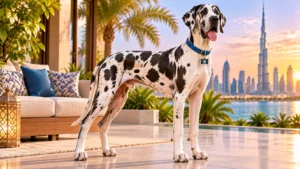
Great Dane size
When Does a Great Dane Reach Its Full Great Dane Size?
Most Great Danes reach close to their adult height between 18 and 24 months. Some may reach their final height earlier, while their body continues to gain muscle and mature afterward.
It is useful to separate three stages of development:
| Development Stage | What Happens |
|---|---|
| Height development | The dog gains most of its height during the first year and continues developing during adolescence. |
| Weight development | Weight increases as the body grows and fills out, particularly during the first 18 to 24 months. |
| Physical maturity | Muscles, chest development, and general body condition may continue changing after the dog has nearly reached its adult height. |
How to Monitor Your Great Dane’s Growth
Do not judge a young Great Dane’s health by weight alone. A puppy that is slightly lighter than the average range may be perfectly healthy.
Pay attention to the following signs:
- Consistent growth over time.
- Maintaining a suitable body condition.
- Eating normally.
- Moving comfortably.
If growth suddenly slows, weight drops, or the puppy appears weak, speak with a veterinarian.
A growth chart is a helpful reference, but it cannot replace an individual health assessment.
Factors That Affect Great Dane Size
Not every Great Dane reaches the same height or weight. Several factors influence how large a dog becomes, and some are determined before the puppy is born.
Genetics and Parent Size
Genetics plays a major role in adult height, body structure, and weight. Puppies from larger parents may have a greater chance of becoming larger adults, although this is not guaranteed.
Ask the breeder about the parents’ measurements and, where possible, the size of previous puppies from the same bloodline. Responsible breeders should be able to discuss their dogs’ development and health history.
Nutrition During Growth
A balanced diet supports bone, muscle, and general development. Great Dane puppies need food designed for large- or giant-breed growth, with carefully controlled energy and mineral levels.
Giving too much food does not produce a healthier or better-proportioned adult. It can encourage excessive weight gain and place additional pressure on developing joints.
Exercise and Activity
Exercise supports muscle development and healthy body condition, but puppies should not be pushed into intense physical activity. Repeated high-impact jumping, long runs, and forced exercise can be unsuitable for a growing giant-breed dog.
The goal is controlled movement, play, and gradual conditioning that match the puppy’s age and ability.
Health and Individual Development
Illness, parasites, digestive problems, and other health conditions can affect weight gain. A puppy that is not growing as expected may need a veterinary examination rather than a change in food alone.
Great Dane Size Compared With Other Dog Breeds
A Great Dane is significantly taller than many popular family breeds. However, height and weight do not always increase at the same rate. Some dogs are shorter but heavier, while others have a tall and lean frame.
Great Dane Size Compared With Popular Breeds
| Breed | Approximate Adult Height | Approximate Adult Weight |
|---|---|---|
| Great Dane | 28–34 inches | 110–175 lb |
| German Shepherd | 22–26 inches | 50–90 lb |
| Labrador Retriever | 21.5–24.5 inches | 55–80 lb |
| Golden Retrievers | 21.5–24 inches | 55–75 lb |
| Rottweiler | 22–27 inches | 80–135 lb |
| Standard Poodle | Over 15 inches | 40–70 lb |
The ranges vary by sex and individual dog. They are intended to show general differences, not to rank breeds by quality or suitability.
Great Dane vs. German Shepherd
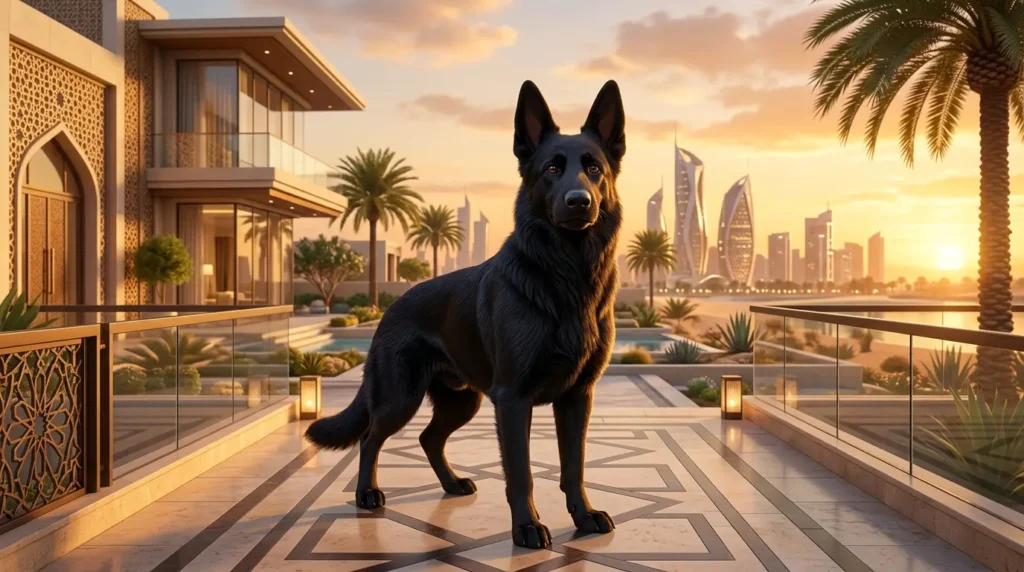
A Great Dane is usually taller and heavier than a German Shepherd. German Shepherds have a more compact working-dog build and are often more agile in activities that involve quick changes of direction.
Both breeds need training and daily activity, but their physical requirements differ. A Great Dane needs equipment and home space that can accommodate a giant frame.
Great Dane vs. Labrador Retriever
Labradors are generally shorter and lighter. They are strong, active dogs, but their overall body size is usually easier to manage in a typical home.
A Great Dane needs:
- A larger bed.
- More floor space.
- A stronger lead and harness.
The difference becomes especially clear when both breeds are fully grown.
Great Dane vs. Rottweiler
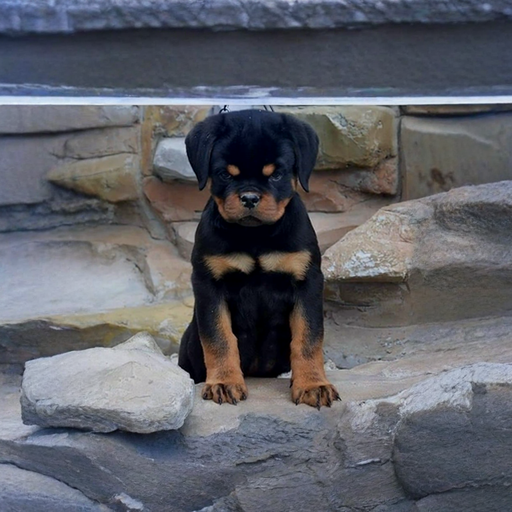
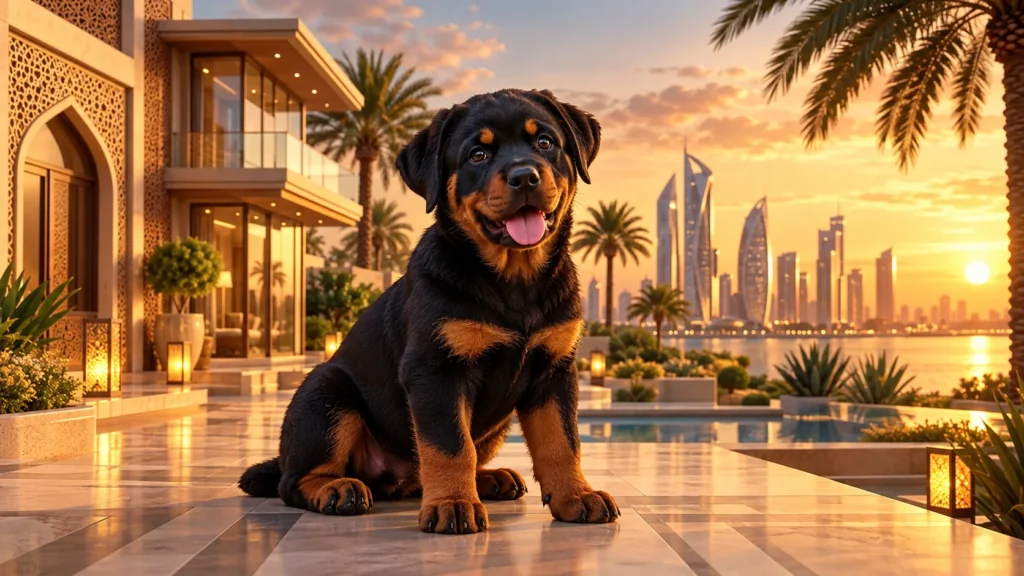
Rottweilers are muscular and powerful, while Great Danes are usually taller with longer legs. Some Rottweilers may weigh as much as a smaller Great Dane, but they generally do not reach the same height.
Both breeds benefit from early socialisation, consistent training, and responsible handling.
Does Great Dane Size Make This Breed Suitable for Apartments?
A Great Dane can live in an apartment if its needs are properly managed. It does not automatically require a large garden, but it does need enough indoor space to move, rest, and stretch without constantly hitting furniture or narrow walkways.
A small apartment with tight corridors, slippery floors, and no convenient outdoor access may be difficult. A larger apartment with a sensible layout can work much better.
Before bringing one home, consider:
- Floor space: The dog should be able to stand, turn around, and lie down comfortably.
- Resting area: A large, supportive bed should fit in a quiet part of the home.
- Access: Check whether lifts, staircases, and doorways are suitable for a giant dog.
- Outdoor routine: Plan regular toilet breaks and walks.
- Building rules: Confirm that your building and landlord allow giant dog breeds.
A Great Dane may be calm indoors after its needs are met, but calm behaviour does not mean it can be left without activity or attention. It is still a large dog that needs company, training, and regular opportunities to move.
Managing Great Dane Size in the UAE Climate
The UAE climate deserves special attention when caring for a giant breed. Great Danes have a short coat, but their large bodies can still become uncomfortable in high temperatures. Hot pavement, strong sunlight, and humid weather can make outdoor activity risky.
During the hottest months, schedule walks early in the morning or later in the evening when conditions are cooler. Avoid long walks during peak heat, and never leave your dog in a parked car.
Useful precautions include:
- Keep fresh drinking water available at home and during outings.
- Walk on shaded routes whenever possible.
- Check the pavement temperature before walking.
- Provide an air-conditioned indoor resting area.
- Avoid intense exercise in hot or humid weather.
- Watch for heavy panting, unusual weakness, excessive drooling, or difficulty breathing.
Heatstroke is a veterinary emergency. If you suspect it, move the dog to a cooler place, begin gentle cooling with cool—not ice-cold—water, and contact a veterinarian immediately.
Because of the breed’s Great Dane size, it may be harder for the dog to cool down after strenuous activity. Owners should not assume that a short-haired dog is automatically comfortable in hot weather.
Feeding Requirements for a Healthy Great Dane Size
Feeding a Great Dane puppy requires more care than simply filling a large bowl. Giant-breed puppies need a diet that supports controlled growth. The aim is to help the dog develop at a steady rate while maintaining a lean body condition.
Choose a complete food specifically formulated for large- or giant-breed puppies. Follow the feeding guide on the product as a starting point, then adjust portions with veterinary advice based on the puppy’s age, activity, and body condition.
How Much Should a Great Dane Eat?
There is no single portion that suits every Great Dane. Food requirements depend on several factors:
- Age and stage of development: Puppies and adult dogs have different nutritional needs.
- Current weight and body condition: Portions should support healthy growth without excessive weight gain.
- Activity level: More active dogs may have different energy requirements.
- Food calorie content: Different foods provide different amounts of calories per serving.
- Individual metabolism and health: Each dog may require an adjusted feeding plan.
Divide a puppy’s daily food into several meals according to the feeding instructions and veterinary guidance. Adult feeding routines may be different, but meals should still be measured rather than estimated by eye.
Why Is Overfeeding a Concern?
Extra calories can cause a puppy to gain weight too quickly. That added weight can place stress on bones and joints that are still developing.
To support healthy growth:
- Follow the recommended feeding portions.
- Monitor your puppy’s weight and body condition.
- Avoid giving excessive treats.
- Do not add calcium or other growth supplements unless a veterinarian specifically recommends them.
A complete, balanced large-breed puppy food should provide the nutrients the dog needs when fed correctly.
Feeding and Bloat Risk
Great Danes are among the breeds at risk of gastric dilatation-volvulus (GDV), commonly called bloat. This is a serious condition in which the stomach fills with gas and may twist. It can become life-threatening very quickly.
Ask your veterinarian about practical ways to reduce risk, including suitable meal routines and whether preventive gastropexy is appropriate.
Warning signs that require emergency veterinary care include:
- A swollen abdomen.
- Repeated unproductive retching.
- Restlessness.
- Sudden signs of distress.
If you notice these symptoms, seek emergency veterinary care immediately.
How to Prepare Your Home for a Large Great Dane Size
A Great Dane needs more than a normal dog bed and a standard food bowl. Its equipment should be strong, appropriately sized, and comfortable for a giant breed.
Before bringing your puppy home, prepare:
- A large bed: Choose a supportive bed that will still fit when the puppy becomes an adult.
- A suitable crate: If crate training is part of your routine, choose a crate that allows the adult dog to stand, turn, and lie down comfortably.
- Strong walking equipment: A well-fitted harness and durable lead are important as the dog grows.
- Large food and water bowls: Use stable bowls that are easy to clean and difficult to tip over.
- Non-slip flooring: Smooth floors can be slippery, especially for a young dog learning to control its long legs.
- Safe storage: Keep food, cleaning products, cables, and small objects out of reach.
- A suitable vehicle arrangement: Think about how you will transport an adult giant dog safely to veterinary appointments.
Also consider the cost of replacing equipment as your puppy grows. A collar or harness that fits at three months may not fit a few months later.
Training and Socialisation for a Dog With a Large Great Dane Size
Training should start early, while the puppy is still relatively small. Great Danes are powerful dogs as adults, so basic manners are essential for safe everyday handling.
Focus on a few important skills:
- Walking calmly on a lead.
- Sitting before greeting people.
- Coming when called.
- Waiting at doors and gates.
- Accepting gentle handling.
- Settling on a bed or mat.
- Meeting unfamiliar people and dogs in a controlled way.
Use rewards, consistency, and short training sessions. Harsh handling can damage trust and make learning more difficult. If you need help with leash manners or socialisation, a qualified trainer who understands giant breeds can provide practical guidance.
Socialisation is not about making every dog or person approach your puppy. It is about helping the dog experience different environments calmly and learn how to respond appropriately.
Grooming and Daily Care for a Dog With a Large Great Dane Size
Great Danes have short, smooth coats that are generally easier to maintain than the coats of many long-haired breeds. A weekly brushing session can help remove loose hair and keep the coat clean.
Their basic care routine should include:
- Brushing the coat regularly.
- Checking the ears and cleaning them when needed.
- Brushing the teeth with dog-safe toothpaste.
- Trimming nails before they become too long.
- Checking the skin for irritation or unusual changes.
- Bathing when necessary with a suitable dog shampoo.
Nail care is particularly important. Long nails can affect the way a large dog places its feet and may make walking uncomfortable. If you are unsure how to trim them safely, ask a veterinarian or professional groomer to show you.
Although grooming is not especially complicated, handling a large adult dog requires enough space and patience. Start getting your puppy comfortable with brushing, paw handling, and routine checks while it is young.
Great Dane Size: Is a Giant Dog Difficult to Handle?
A Great Dane’s size can make some everyday tasks more demanding. Taking the dog into a vehicle, visiting a busy public place, or helping it during illness may require planning.
The dog itself is not necessarily difficult to manage because it is large. Good training and a calm temperament make a major difference. However, owners should be physically prepared to control a powerful dog on a lead and should not rely on strength alone.
The best approach is to teach good manners early, use properly fitted equipment, and establish predictable routines. If the dog develops a behaviour problem, seek professional help before it becomes harder to manage.
Frequently Asked Questions About Great Dane Size
1. How big does a Great Dane get?
An adult male Great Dane usually stands around 30 to 34 inches (76 to 86 cm) at the shoulder and weighs approximately 140 to 175 pounds (64 to 79 kg). Females are generally 28 to 32 inches (71 to 81 cm) tall and weigh around 110 to 140 pounds (50 to 64 kg).
2. Is a Great Dane bigger than a German Shepherd?
Yes. Great Danes are generally much taller and heavier than German Shepherds. A German Shepherd usually stands around 22 to 26 inches at the shoulder, while a Great Dane can reach 34 inches.
3. At what age does a Great Dane stop growing?
Many Great Danes reach close to their adult height between 18 and 24 months. Some may reach their final height earlier, but their body can continue filling out as they mature.
4. Are male Great Danes bigger than females?
Yes. Males are usually taller and heavier, although individual dogs can vary. Genetics and the size of the parents also influence adult measurements.
5. Can a Great Dane live in an apartment?
Yes, provided the apartment has enough room for the dog to move and rest comfortably. Owners must also provide daily walks, suitable indoor conditions, and access to outdoor toilet areas.
6. How much does an adult Great Dane weigh?
Adult males commonly weigh around 140 to 175 pounds (64 to 79 kg), while females often weigh 110 to 140 pounds (50 to 64 kg). Healthy weight depends on height, body structure, and condition.
7. Is a Great Dane suitable for the UAE climate?
A Great Dane can live in the UAE, but owners need to manage heat carefully. Provide an air-conditioned indoor space, fresh water, and walks during cooler hours. Avoid strenuous exercise in high temperatures.
8. Does a Great Dane need a lot of food?
Great Danes need more food than small breeds, but the correct amount depends on age, weight, activity, and calorie content. Puppies should eat a complete large- or giant-breed growth formula, with portions guided by the feeding instructions and a veterinarian.
9. Are Great Danes good family dogs?
Many Great Danes are affectionate and gentle with their families. Early training and socialisation are important, and all interactions with young children should be supervised because the dog’s size can lead to accidental knocks.
10. Is the largest Great Dane puppy always the best choice?
No. A puppy’s size alone does not show whether it is health-bred. Consider its health records, movement, temperament, parents, and veterinary assessment instead.
11. How can I estimate my Great Dane puppy’s adult size?
The puppy’s sex, current growth pattern, and parents’ measurements can provide useful clues. A veterinarian can monitor its development and help assess whether its growth is appropriate.
12. How often should a Great Dane visit the veterinarian while growing?
Puppies need regular veterinary visits for vaccinations, parasite prevention, growth checks, and general health advice. Your veterinarian can recommend a schedule based on age, health, and local requirements.